Cooling Your Head Helps You Fall Asleep Faster. Here is why
Hint: you share this trick with seals and whales.
July 25, 2026·6 min read
You went to bed at night, your body is dead tired, but mind is fully active, thoughts just won't stop looping, stress of pending work, past experiences flashes before you. You are staring at the ceiling calculating how long sleep you will get if you sleep just now. The harder you try to sleep, paradoxically the harder it gets to actually sleep.
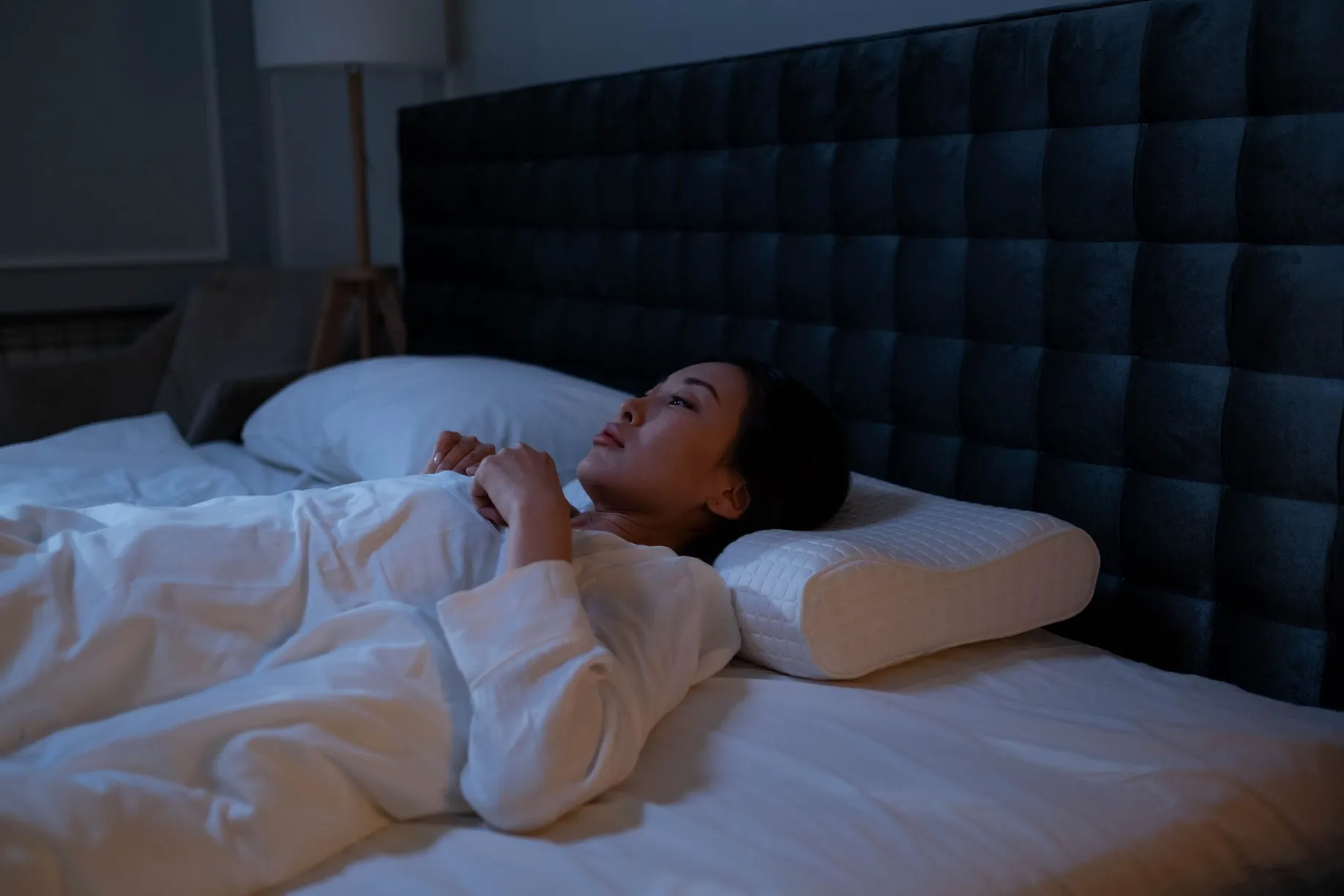
The thing is, your nervous system is stuck in an alert and activated state, and there are a few ways to calm it down, some work better than others. Some, like breathing techniques, require your active participation, others are completely passive.
In this article we will discuss one such not so well known but surprisingly effective passive method to sleep faster and better:cooling your head.
You Intuitively Know This
Think about the last time you were really stressed, before an exam, before a big meeting, right after a fight with someone. What did you do? Chances are you walked up to the sink and splashed cold water on your face. Nobody taught you this from a book, you just knew it would help.
Or think about a bad headache. The first thing most people reach for isn't a pill, it's a cold, wet cloth pressed against the forehead. Or a cold water bottle held right there for a few minutes.
This isn't a coincidence, and it isn't just about feeling fresh. Even in first aid, when someone's about to faint or is in the middle of a panic attack, a cold compress to the forehead is one of the first things you're told to reach for. Nobody tells you to cool your hands or your feet, it's always the forehead.
You already do this, on instinct, without ever asking why. You just never stopped to think about why, here is why.
Your Forehead Has a Built-In Calm Switch
The trigeminal nerve covers your forehead, and it connects directly to the vagus nerve, the nerve in charge of your body's rest-and-digest response.
Cool this exact region, and that connection gets triggered almost instantly. Heart rate starts slowing within about 5 to 6 seconds. The nervous system shifts out of alert mode and into calm mode, and you can feel it happening in real time.
Khurana and colleagues, in a landmark 1980 study published in Annals of Neurology, established that cooling this exact region reliably triggers this vagal response in humans.1
This Reflex Is Older Than You Think
This isn't some accidental quirk of your nervous system. Diving mammals, seals, whales, use this exact same wiring to hold their breath underwater for impossibly long stretches. When a mammal's face hits cold water, the body assumes it's about to go underwater, andshifts into oxygen-saving mode. Heart rate drops, blood redirects toward the brain and heart, and the whole system slows down to use less oxygen.

Humans still carry a weaker version of this same reflex, and the numbers make it real. In a lab test, human heart rate dropped from 76 beats per minute all the way down to 56, just from cold water hitting the face. Now look at a Weddell seal. Heart rate drops from over 100 to as low as 4, the moment it dives. Same reflex. Same nerve. Your body is running a smaller version of what lets a seal survive an hour underwater.
The forehead specifically is the trigger zone for a simple reason:it's the first part of your body that hits the water when you dive in face first. Evolution built the detector exactly where it needed to be.
Cool that same spot at night, and you're not tricking your body into anything new. You're activating a switch that's been there the whole time, just for a different reason.
The Same Diving Response Helps Your Brain Sleep
This mechanism even has a name: the diving reflex. Quintana and colleagues measured exactly what happens in the moment it kicks in. Heart rate variability rises within seconds of cooling the forehead, a clear, measurable sign that your parasympathetic nervous system, your body's calming system, has taken over.2
This is exactly why splashing cold water on your face works, why a cold cloth on your forehead calms you down before a headache eases. Your body already knew this. Now you know why.
A More Efficient Method than Cooling the Whole Room
While cooling your room in general helps your body lower its core body temperature, and this naturally supports sleep onset, your forehead sits right next to your brain, and it carries the densest concentration of the trigeminal nerve. Cooling it directly works faster and hits harder than cooling an entire room around you.It's a shortcut to the same effect.
This is the exact mechanism Nidroo's forehead-worn cooling headband is built around: rhythmic cooling applied directly to this nerve pathway, timed to the window before sleep onset when your body needs to shift out of alert mode and into rest.
To Sum It Up
Next time you're lying there, staring at the ceiling, doing that same math in your head, you don't have to just wait it out. Your body already has the switch. It's been there since before you were born, built into a nerve running right under your forehead.
You don't need to trick your nervous system into anything new. You just need to cool the one spot it's already listening to.
Published Research on This Effect
- Khurana et al., 1980, Cold face test in the assessment of trigeminal-brainstem-vagal function in humans, Annals of Neurology
- Quintana et al., 2016, Cold Face Test-Induced Increases in Heart Rate Variability, Journal of Psychophysiology
- Jungmann et al., 2018, Effects of Cold Stimulation on Cardiac-Vagal Activation in Healthy Participants, JMIR Formative Research
- Lan et al., 2018, Local body cooling to improve sleep quality and thermal comfort in a hot environment, Indoor Air
- Hamanishi et al., 2019, Head cooling during sleep improves sleep quality, PLOS ONE
- Roth et al., 2018, A novel forehead temperature-regulating device for insomnia, Sleep
- Okamoto-Mizuno et al., 2003, Effects of head cooling on human sleep stages and body temperature, International Journal of Biometeorology
- Mysliwiec et al., 2021, Effects of a forehead cooling device in veterans with chronic insomnia disorder, Sleep and Breathing
- Baker et al., 2020, forehead cooling and menopausal sleep disturbance, Behavioral Sleep Medicine
- Schlader et al., 2018, Face cooling reveals a relative inability to increase cardiac parasympathetic activation during passive heat stress, Experimental Physiology
- Krone et al., 2023, Brain stimulation techniques as novel treatment options for insomnia, a systematic review, Journal of Sleep Research
- Song et al., 2025, a review of sensory-based sleep interventions including thermoregulation